LICENSED | BONDED | INSURED
618-235-3202
Ceiling Water Damage: What That Brown Stain Really Means

If you've been devastated by water, mold, fire, and/or smoke damage, know that your cherished possessions, your home or business, can all be restored to pre-damage condition; bringing back your peace of mind.
Whether water, mold, fire, or smoke causes damage to your home or business, the effects are heartbreaking and often life-changing. We at All Clean Restoration understand the devastation and pain these events can cause. We also understand that quick and proper action is crucial to prevent further damage, red tape, and cost.
Call us any time, day or night:
1-800-4223944
Related Topics:
You look up and there it is — a brown ring on the ceiling that wasn’t there last week. It might be dry to the touch. It might be spreading. Either way, ceiling water damage is rarely just a cosmetic problem.
A stain on your ceiling is a symptom. Water is coming from somewhere above, and the drywall is only the part you can see. Across Belleville, Edwardsville, and the St. Louis Metro, we trace these stains back to their source every day. The stain is the map. The leak is the destination.
Why a Ceiling Stain Is Never “Just a Stain”
Drywall soaks up water like a sponge. By the time a stain shows, the material behind it is already saturated. That hidden moisture is what causes real damage.
Ceiling water damage puts three things at risk:
- Structural integrity. Wet drywall softens, sags, and can collapse under its own weight.
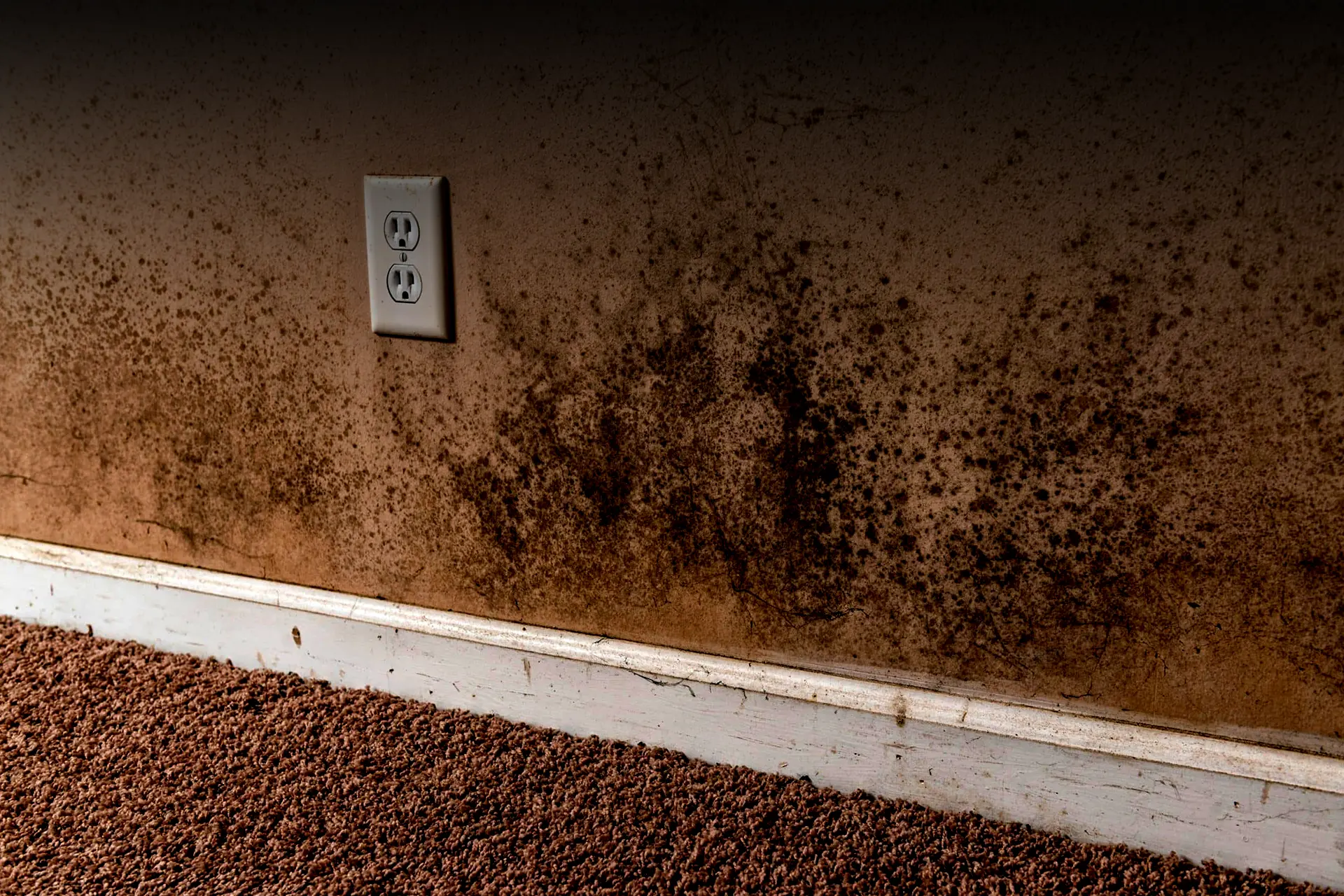
- Mold growth. Damp, dark ceiling cavities are ideal for mold. Growth can begin within 24–48 hours, per the EPA’s guidance on moisture and mold.
- Electrical hazards. Water traveling through a ceiling can reach light fixtures, junction boxes, and wiring.
A dry-looking stain doesn’t mean the problem stopped. It often means the leak is slow — and slow leaks do the quietest, most expensive damage.
Where Is the Water Coming From?
Finding the source is the whole job. The water rarely enters directly above the stain — it travels along joists and settles at the lowest point.
Common sources we find
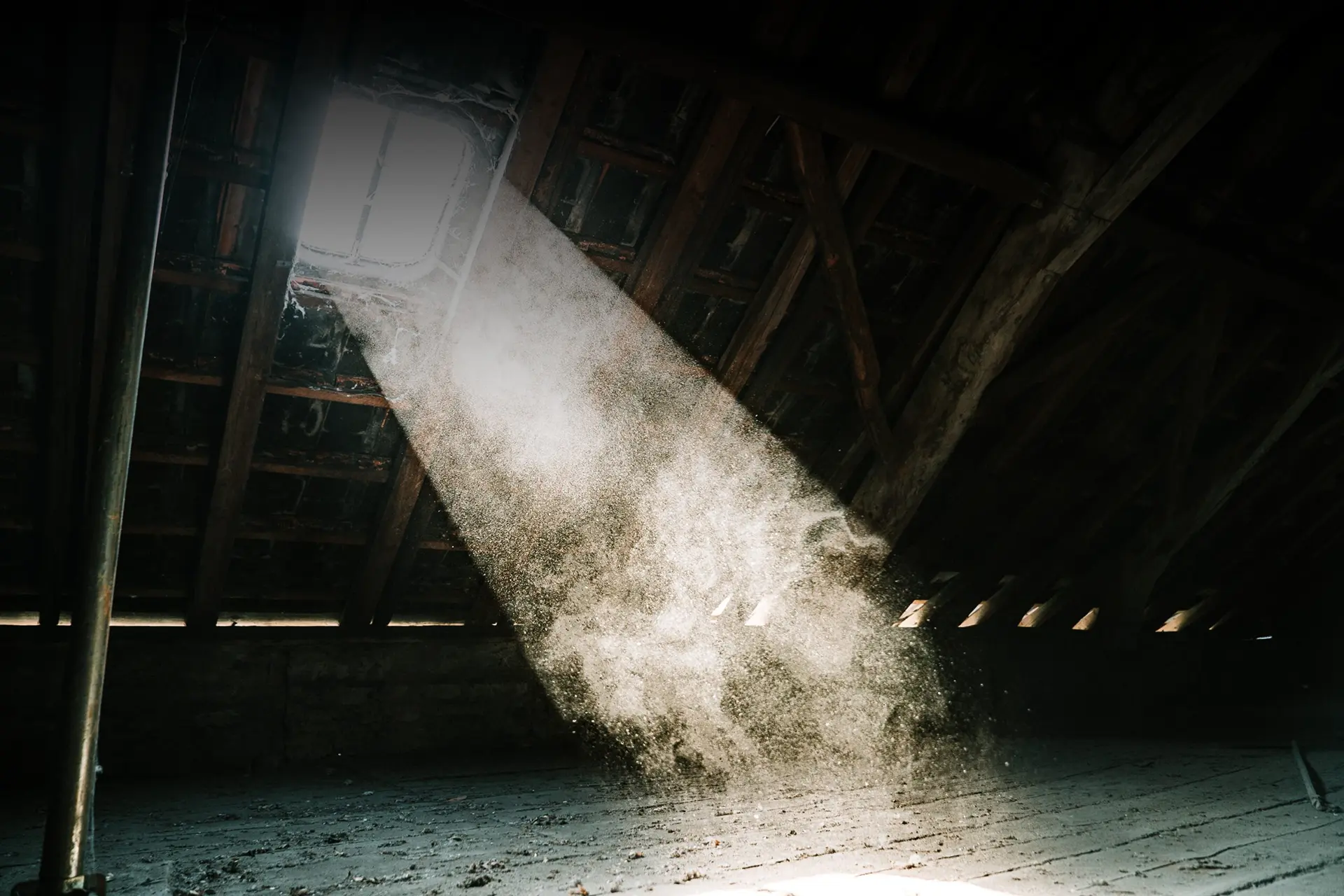
- Roof leaks. Storm-damaged shingles, failed flashing, or ice dams in winter. These often tie into attic moisture and attic mold.
- Plumbing leaks. A supply line, drain, or fixture in the floor or wall above.
- HVAC condensation. A clogged AC drain line or sweating ductwork in the attic.
- Overflow from above. An upstairs tub, toilet, or appliance that spilled or backed up.
If the stain sits under a bathroom, kitchen, or attic, that narrows it fast. We confirm the source with thermal imaging before we open anything up.
Can Water-Damaged Ceilings Be Saved?
Sometimes. It depends on how long the water sat and how far it spread. We answer this honestly, because guessing wrong costs you money.
If we catch it early, targeted drying can save the drywall. We use the same wall and cabinet drying methods on ceilings — moisture readings, air movers, and controlled dehumidification. When drywall is sagging, crumbling, or already growing mold, replacement is the safer call. We tell you which one it is and show you the readings behind the decision.
What to Do When You Spot a Ceiling Stain
Act like the leak is still active, because it usually is.
- Move valuables and electronics out from under the stain.
- Place a bucket if there’s any dripping, and a towel to catch splatter.
- Do not poke a sagging bulge unless water is pooling and you must relieve it into a container.
- Cut power to affected fixtures at the breaker if water is near lighting.
- Photograph everything for your insurance claim before any cleanup.
- Call for professional water extraction and drying to stop the damage from spreading.
The faster the source is found and the cavity is dried, the more of your ceiling — and your budget — we save. Prompt water damage restoration is what keeps a small stain from becoming a full ceiling replacement.
Because ceiling leaks often start above, they can involve your roof, attic, or upstairs plumbing at the same time. That’s why we handle the whole job under one roof, from the first extraction to full restoration. We also document everything for your adjuster and can walk you through how the insurance process works.
We respond across the Metro East and St. Louis — from Collinsville and O’Fallon to Alton. Check our service area to confirm we cover your town.
That brown ring won’t dry on its own — the water above it is still moving. Call All Clean Restoration to find the source, dry it right, and restore your ceiling to pre-loss condition. Our phones are answered live, 24/7, every single day of the year — weekends and holidays included. Family-owned since 1981. Licensed, bonded, insured, and IICRC-certified. Illinois: 618-235-3202 · Missouri: 314-454-0442 · Se Habla Español: 618-792-3633 Or contact us online for a free estimate.
Recent Blog Articles:

Helping You Rise from the Ashes: Fire and Smoke Restoration Services by All Clean Restoration

Why Moisture Barriers are Essential for Your Home: Preventing Mold, Rot, and More

Dehumidifiers: Very Helpful for Mold Prevention in Your Home

Properly Drying Carpets and Rugs After Water Damage: Saving Your Investment in Illinois and Missouri
All Clean Restoration's Other Services
Whether water, mold, fire, or smoke causes damage to your home or business, the effects are heartbreaking and often life-changing. We at All Clean Restoration understand the devastation and pain these events can cause. We also understand that quick and proper action is crucial to prevent further damage, red tape, and cost.

Licensed | Bonded | Insured