LICENSED | BONDED | INSURED
618-235-3202
Hidden Threats: Is Mold Growing Inside Your Walls?

If you've been devastated by water, mold, fire, and/or smoke damage, know that your cherished possessions, your home or business, can all be restored to pre-damage condition; bringing back your peace of mind.
Whether water, mold, fire, or smoke causes damage to your home or business, the effects are heartbreaking and often life-changing. We at All Clean Restoration understand the devastation and pain these events can cause. We also understand that quick and proper action is crucial to prevent further damage, red tape, and cost.
Call us any time, day or night:
1-800-4223944
Related Topics:
For many homeowners, the word “mold” conjures up images of neglected properties or damp, dark caves. But the reality is much more mundane—and much more common. Mold is an opportunistic organism that only needs a small amount of moisture and a food source to thrive. In the average American home, food sources are everywhere: drywall, wood, carpet, and even the dust on surfaces.
The most dangerous mold, however, isn’t the black spot you see in the corner of your shower. It’s the mold you can’t see—the “hidden threat” growing inside your walls, under your floorboards, or in your attic.
Understanding the Life Cycle of Mold
To understand why hidden mold is such a problem, you have to understand how it grows. Mold reproduces through microscopic spores that are constantly floating in the air. These spores are harmless until they land on a damp surface. Once they find moisture, they begin to grow hyphae (root-like structures) that digest the material they are sitting on.
In a typical home, a slow leak from a pipe inside a wall or a small roof leak can provide just enough moisture for mold to flourish. Because the area is dark and undisturbed, the mold can grow for months or even years before a homeowner notices a single visible sign.
The Warning Signs of Hidden Mold
Since you can’t always see the problem, you have to rely on your other senses and “clues” your house is giving you.
- The Musty Odor: This is often the first sign. Mold releases Microbial Volatile Organic Compounds (mVOCs) as it grows. These gases have a distinct, earthy, or “wet sock” smell. If you notice a smell that persists even after you’ve cleaned and aired out a room, there is a high probability of mold hidden nearby.
- Unexplained Health Issues: Are you or your family members experiencing “seasonal allergies” that never seem to go away? Chronic coughing, sneezing, itchy eyes, and skin rashes are common symptoms of mold exposure. For those with asthma or compromised immune systems, the reactions can be much more severe.
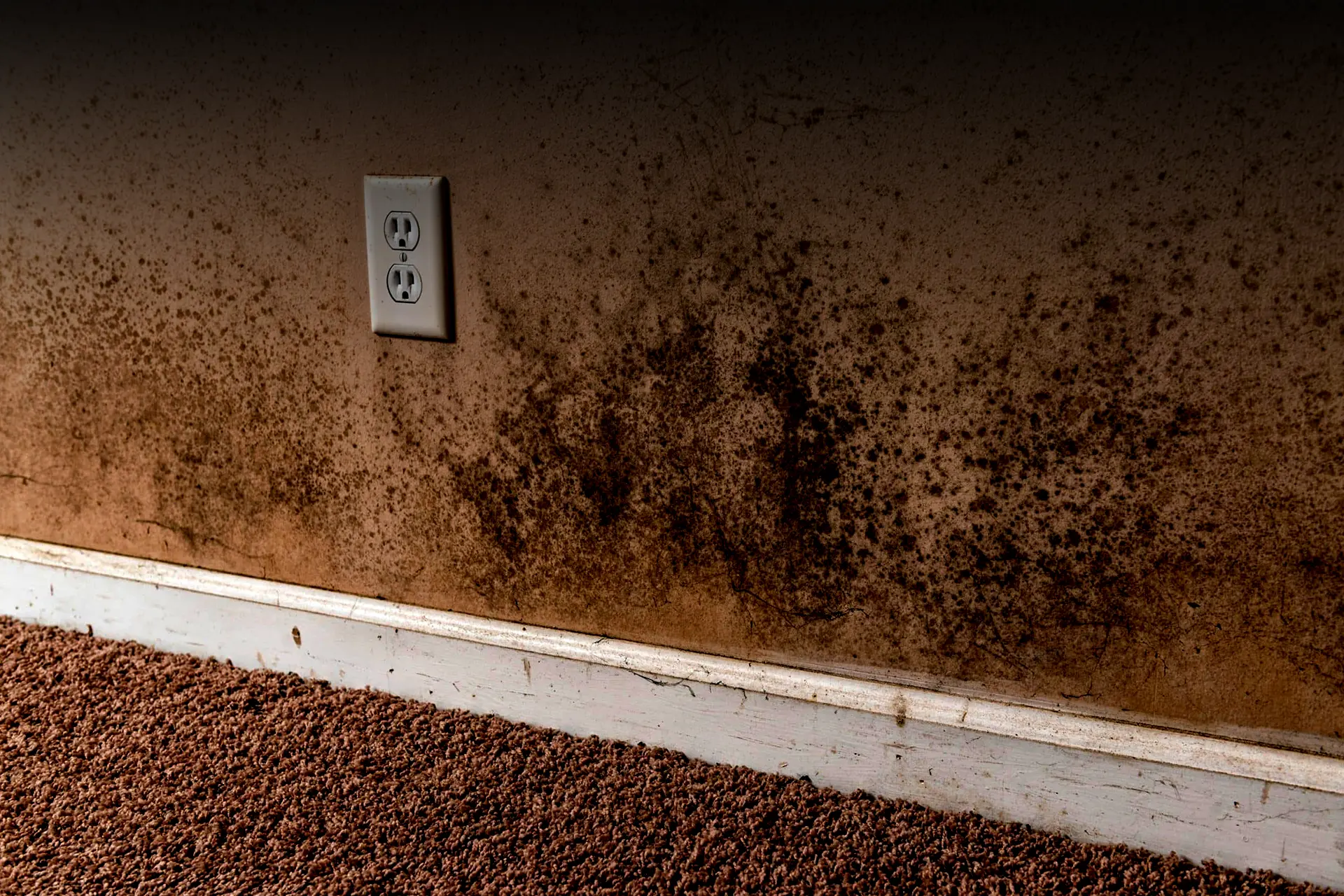
- Physical Changes to Surfaces: Look closely at your walls. Is the wallpaper peeling slightly? Is the paint bubbling or cracking? Is there a faint discoloration or “staining” that looks like a water spot? These are often signs that moisture is trapped behind the surface, and where there is moisture, there is almost certainly mold.
- Past Water Damage: If your basement flooded a year ago and you “dried it out yourself,” you may have left moisture trapped in the wall cavities. Hidden mold is the most common “secondary damage” following an improperly handled water loss.
The Role of Technology: Finding the Invisible
In the past, finding hidden mold required “exploratory surgery”—tearing out sections of drywall just to see what was behind them. Today, All Clean Restoration uses non-invasive technology to see through your walls.
- Thermal Imaging (Infrared): Moisture changes the temperature of a material. Our high-resolution infrared cameras can detect “cold spots” in your walls that indicate moisture pockets. This allows us to pinpoint exactly where the problem is without making a single hole in your drywall.
- Moisture Meters: We use specialized probes that can measure the moisture content of wood and drywall. By comparing the moisture levels of different areas, we can track the “path” of a hidden leak to its source.
- Air Quality Testing: If we suspect mold but can’t find a physical source, we can take air samples. These samples are analyzed in a lab to determine the concentration of mold spores in your home compared to the outside air. If the indoor count is significantly higher, we know there is an active colony somewhere in the structure.
The Dangers of “DIY” Mold Removal
When homeowners do find a patch of mold, their first instinct is often to reach for a bottle of bleach. This is a mistake. Bleach is mostly water. While it may kill the mold on the surface of a non-porous material (like a tile), the water in the bleach actually soaks into porous materials (like drywall), providing even more moisture for the mold roots that are buried deep inside. Furthermore, disturbing a mold colony without proper containment will cause it to release millions of spores into the air, which then travel through your HVAC system and settle in every other room of your house.
The Professional Remediation Process
At All Clean Restoration, we follow a strict, clinical process to ensure mold is not just “cleaned,” but permanently removed.
- Containment: We use heavy-duty plastic sheeting and “negative air pressure” machines. This ensures that any spores stirred up during the cleaning process are trapped and filtered out of your home, rather than spreading.
- HEPA Filtration: We use industrial air scrubbers with HEPA filters that can trap particles as small as 0.3 microns. This cleans the air while we work.
- Removal and Cleaning: Any porous materials (like drywall or insulation) that are heavily infested must be safely removed and discarded. Non-porous surfaces are cleaned using specialized antimicrobial agents that are safer and more effective than bleach.
- Addressing the Source: Removing the mold is useless if you don’t fix the moisture problem that caused it. Whether it’s a leaky pipe, a grading issue in your yard, or poor attic ventilation, we help you identify the root cause so the mold doesn’t come back.
Why Experience Matters
For over 45 years, All Clean Restoration has been the trusted name for mold removal in the St. Louis Metro and Metro East areas. We understand that finding mold in your home is scary, but it doesn’t have to be a disaster. Our team treats your home with the same care we would our own, using a formal, straightforward approach to get your environment back to a healthy state.
Conclusion: Take the First Step
If you suspect there is a hidden threat in your walls, don’t wait for it to become a visible catastrophe. The longer mold grows, the more damage it does to your home’s structure and your family’s health.
Call All Clean Restoration today for a professional assessment. We have the technology, the experience, and the dedication to keep your home safe and dry.
- Illinois: 618-235-3202
- Missouri: 314-454-0442
Recent Blog Articles:

Why DIY Water Damage Cleanup Often Leads to Mold

The Homeowner’s Guide to Restoration Insurance Claims

The 24-Hour Rule: Why Immediate Water Remediation Saves Your Home

Flooded Basements: From Extraction to Hardwood Floor Drying
All Clean Restoration's Other Services
Whether water, mold, fire, or smoke causes damage to your home or business, the effects are heartbreaking and often life-changing. We at All Clean Restoration understand the devastation and pain these events can cause. We also understand that quick and proper action is crucial to prevent further damage, red tape, and cost.

Licensed | Bonded | Insured