LICENSED | BONDED | INSURED
618-235-3202
The Water Stain That Changed Everything: When Your Kitchen Floor is Compromised

If you've been devastated by water, mold, fire, and/or smoke damage, know that your cherished possessions, your home or business, can all be restored to pre-damage condition; bringing back your peace of mind.
Whether water, mold, fire, or smoke causes damage to your home or business, the effects are heartbreaking and often life-changing. We at All Clean Restoration understand the devastation and pain these events can cause. We also understand that quick and proper action is crucial to prevent further damage, red tape, and cost.
Call us any time, day or night:
1-800-4223944
Related Topics:
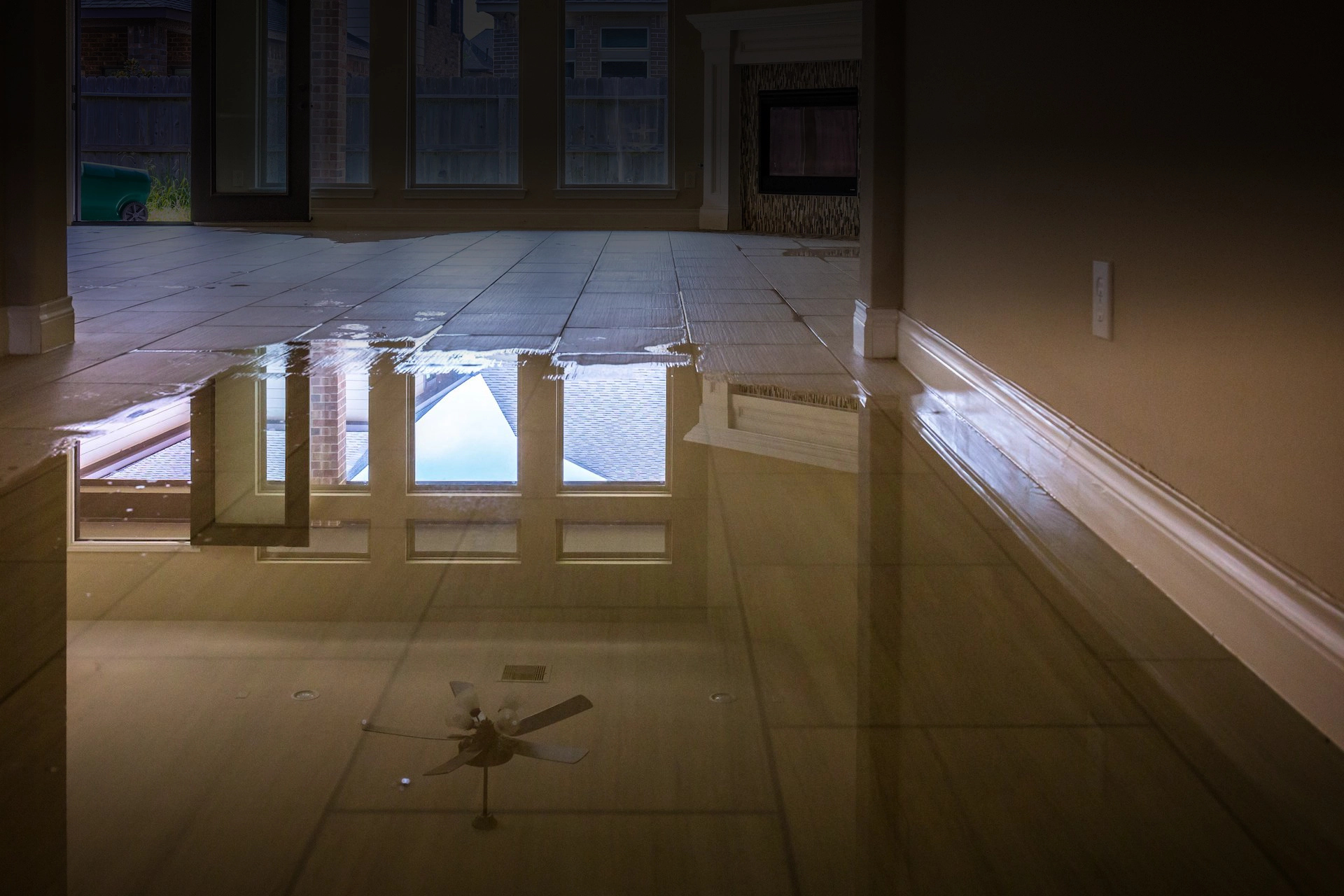
You’re reaching for the milk when your sock hits something wet. You look down. Water. A small puddle spreading out from under your refrigerator.
Your first thought is relief—it’s just water, not something worse. You grab a towel, wipe it up, and make a mental note to check the ice maker connection this weekend. Life moves on. Dinner needs to be made. Kids need help with homework. The puddle becomes another item on your endless to-do list.
But beneath your feet, where you can’t see it, something catastrophic is unfolding. That water you just wiped up? It’s been seeping into your beautiful hardwood floor for weeks, maybe months. Every time you walked past your refrigerator and heard that faint dripping sound you kept meaning to investigate, more water was penetrating deeper into the wood, soaking through to the subfloor, saturating the floor joists that hold up your entire kitchen.
Right now, as you read this, the structural integrity of your Belleville or Edwardsville kitchen floor might be quietly failing beneath the very appliance that’s supposed to preserve your family’s food.
The Sound You’ve Been Ignoring
Think back over the past few months. Have you noticed your kitchen floor feeling slightly soft near the refrigerator? Has there been a faint musty smell you attributed to “something in the back of the fridge”? Did you occasionally find small puddles that seemed to appear and disappear randomly?
These weren’t random occurrences. They were warnings.
The ice maker line that developed a slow leak. The defrost drain that’s been clogged for months. The water supply connection that loosened just enough to drip steadily when the ice maker cycles. Whatever the source, water has been doing what water does best—finding the path of least resistance and destroying everything in its way.
Hardwood floor water damage doesn’t happen all at once. It’s insidious. Each drip seems insignificant. A teaspoon of water here, a tablespoon there. But wood is hygroscopic—it absorbs moisture like a sponge. And once water penetrates the finish and seeps into the grain, the destruction accelerates exponentially.
Your gorgeous oak or maple kitchen floor that cost thousands to install is now cupping, warping, and developing black stains from mold growth. The plywood subfloor beneath it has swollen and delaminated. And the floor joists—the structural beams that support not just your floor but your entire kitchen—have been absorbing water for so long that they’re beginning to rot.
The Crisis Beneath Your Feet
Here’s what most homeowners in O’Fallon, Collinsville, and throughout the Metro St. Louis area don’t understand about refrigerator leaks: by the time you see water on the surface, the damage below is already severe.
Wood flooring is designed to resist surface moisture—spilled drinks, tracked-in rain, routine mopping. But it’s not designed to resist constant water exposure from underneath. When your refrigerator leaks, water doesn’t just sit on top of your floor. It seeps down through any microscopic gap in the finish, penetrates the tongue-and-groove joints, and pools on the subfloor where you can’t see it.
In that dark, damp space beneath your hardwood, conditions are perfect for catastrophic damage. The subfloor absorbs water and swells, pushing up against your hardwood and causing it to buckle. The floor joists, typically made of dimensional lumber, soak up moisture like a wick drawing water upward. And within 24-48 hours, mold begins to colonize these wet materials.
You might be standing in your kitchen right now, looking at a floor that appears mostly fine except for some slight discoloration near the refrigerator. What you can’t see is the rotting subfloor, the weakened floor joists, and the mold colonies spreading through the darkness beneath your feet.
The terrifying part? If this has been going on long enough, your floor joists may have lost 50% or more of their structural capacity. Your kitchen floor might literally be on the verge of collapse.
When Good Intentions Make Everything Worse
The typical homeowner response to discovering a refrigerator leak follows a predictable—and dangerous—pattern.
You discover the puddle. You wipe it up. You fix the leaking connection or call a handyman to repair the ice maker line. You think the problem is solved. Maybe you notice the floor looks a bit darker in that area, so you set up a fan to “dry it out.” You feel responsible and proactive.
But you’ve just made a critical mistake that could cost you tens of thousands of dollars and months of disruption to your family’s life.
Running a fan over wet hardwood without addressing the moisture trapped beneath the surface is like putting a band-aid on a severed artery. That fan is only drying the surface while the subfloor and joists continue to deteriorate in the darkness below. Worse, if mold has already started growing, that fan is now spreading mold spores throughout your Fairview Heights or Glen Carbon home, contaminating areas that were previously clean.
Fixing the leak without addressing the water damage is closing the barn door after the horse has escaped. Yes, you’ve stopped new water from entering, but you haven’t addressed the damage already done. The saturated subfloor will remain wet for weeks or months without professional water extraction and drying. The weakened floor joists will continue to deteriorate. The mold will continue to spread.
And every day you wait, thinking you’ve handled it, the damage multiplies.
The Hidden Costs of “I’ll Handle It Myself”
You’re a capable person. You’ve tackled home improvement projects before. You have a wet/dry vacuum in the garage. Surely you can handle some water under your refrigerator without calling professionals and spending money you weren’t planning to spend.
This is exactly the thinking that transforms a $2,000 repair into a $25,000 catastrophe.
Professional hardwood floor water damage restoration isn’t just about removing visible water. At All Clean Restoration, our IICRC-certified technicians use specialized equipment and techniques that homeowners simply don’t have access to. We use moisture meters to measure water content deep within your flooring and subfloor, thermal imaging cameras to identify hidden moisture pockets invisible to the naked eye, industrial dehumidifiers that create conditions impossible to achieve with box fans, specialized wood floor drying systems that extract moisture from hardwood without causing further damage, and air quality testing to detect mold growth before it becomes visible.
When you try to handle refrigerator leak water damage yourself, you’re working blind. You can’t see the moisture content of your subfloor. You can’t detect the early stages of mold growth. You can’t assess whether your floor joists have been compromised. You’re essentially hoping for the best while the worst quietly unfolds beneath your feet.
According to industry research, 67% of homeowners paid significantly more because they delayed professional mitigation or attempted DIY repair. That statistic represents real families in Highland, Waterloo, and Troy who thought they were saving money by handling it themselves, only to discover months later that their entire kitchen floor needed to be torn out and rebuilt—along with mold remediation services they never anticipated needing.
The Structural Nightmare You’re Not Considering
Let’s talk about what’s really at stake here: the structural integrity of your home.
Floor joists are engineered to support specific weight loads when they’re dry and intact. A standard 2×10 floor joist can support thousands of pounds when properly installed and maintained. But when that same joist absorbs water for weeks or months, its load-bearing capacity decreases dramatically.
Wood rot—caused by prolonged moisture exposure—literally eats away at the wood fibers that give the joist its strength. What started as solid dimensional lumber becomes spongy, weak, and structurally compromised. A joist that’s been exposed to water for three months might have the load-bearing capacity of a joist half its size.
Your kitchen isn’t a lightweight space. You have cabinets filled with dishes and food. Heavy appliances including that refrigerator that’s been leaking. Countertops made of granite or quartz. And multiple people walking through constantly, creating dynamic loads the floor must support.
When floor joists weaken, things happen that homeowners never anticipate. Your tile countertops develop cracks as the floor sags beneath them. Cabinet doors no longer close properly because the cabinets are shifting as the floor settles. Your refrigerator—the source of the leak—might even tilt as the floor beneath it gives way. In extreme cases we’ve seen in Mascoutah and Shiloh, homeowners have actually felt their kitchen floor bounce or heard creaking sounds as weakened joists struggle under normal use.
The worst-case scenario? Complete floor failure. We’ve responded to emergencies where refrigerator leaks compromised floor joists to the point that the floor literally collapsed, sending the refrigerator and everything on the surrounding floor crashing into the basement or crawlspace below.
This isn’t fear-mongering. This is the reality of what happens when water damage to structural elements goes unaddressed.
The Mold That’s Growing Right Now
While you’re worried about your hardwood floor and structural issues, there’s another threat developing in that dark, wet space beneath your kitchen: mold.
Mold is a serious health risk to everyone in your home or office, particularly children, elderly family members, and anyone with respiratory conditions. And the conditions beneath a water-damaged kitchen floor are paradise for mold growth—constant moisture, organic material (wood) to feed on, darkness, and still air.
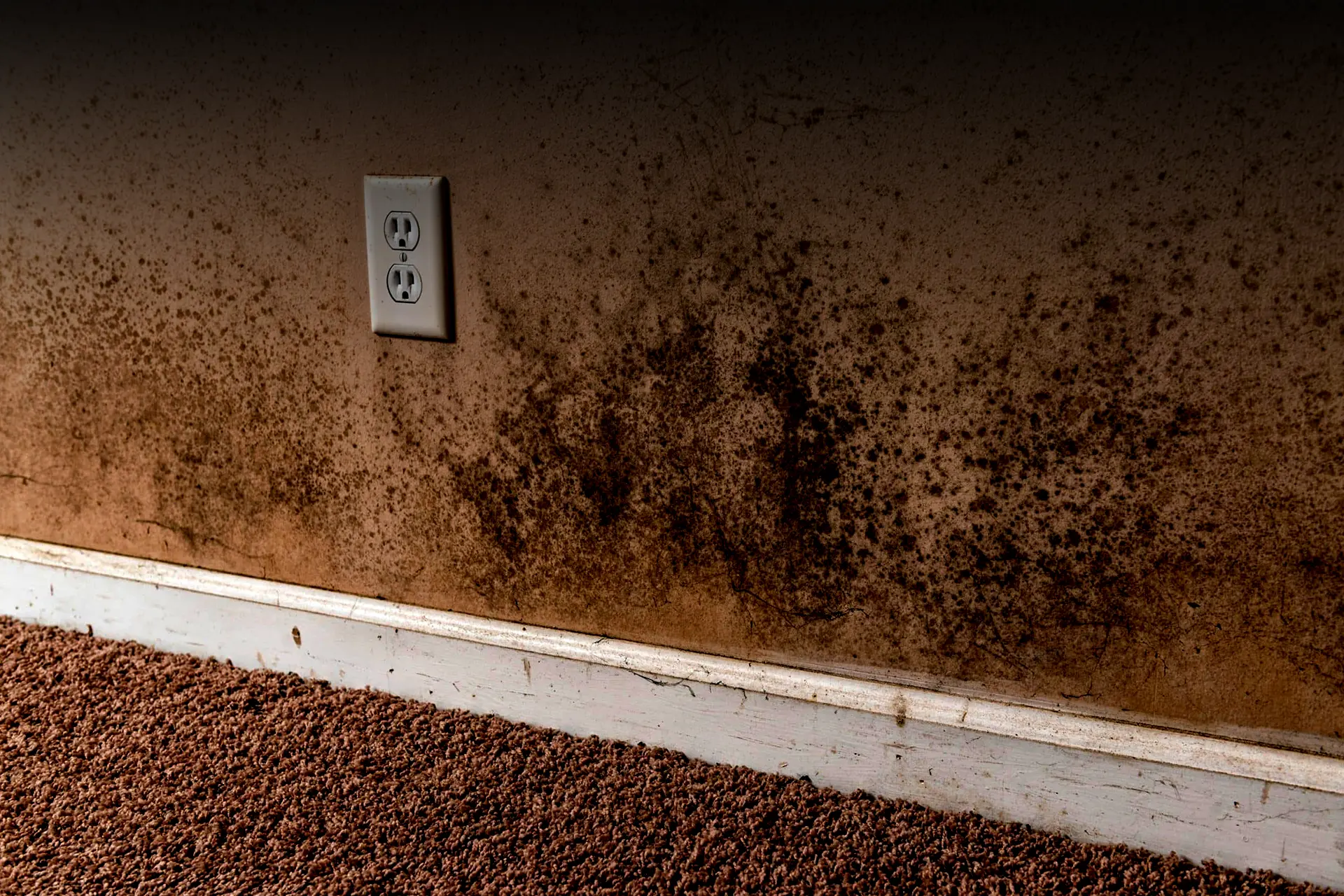
Within 24-48 hours of water exposure, mold spores begin to colonize wet materials. If your refrigerator has been leaking for weeks or months, you don’t have early-stage mold—you have established colonies releasing thousands of spores into your home’s air supply every single day.
Here’s what makes this particularly insidious: the mold growing beneath your floor isn’t visible. You can’t see it, so you don’t know it’s there. But your family is breathing those spores. That persistent cough your daughter has developed. The unexplained headaches your spouse complains about. The allergies that seem worse at home than anywhere else. These might not be coincidences—they might be symptoms of mold exposure.
By the time you notice that musty smell near your refrigerator or see visible mold growth on the baseboards, the problem beneath your floor is extensive. What could have been addressed with targeted mold removal has become a full-scale mold remediation project requiring complete floor removal, joist treatment, and extensive air quality restoration.
The 3 AM Realization
It’s the middle of the night when it hits you. You can’t sleep because you’re thinking about that puddle you found last week. You’ve been wiping it up every few days, but it keeps coming back. You think about your children sleeping upstairs, directly above that kitchen floor. You remember reading something about mold and respiratory problems.
You grab your phone and search “refrigerator leak wood floor damage.” The articles you find are terrifying. Floor joist rot. Structural failure. Toxic mold. Tens of thousands in repairs. You feel your stomach drop as you realize this isn’t something you can ignore anymore.
This is when you need to call 618-235-3202.
All Clean Restoration answers the phone at 3 AM. Not an answering service—real people who understand water damage emergencies and know that your anxiety won’t wait until Monday morning. We answer or return your call within 30 minutes, day or night, because we know that the moment you realize the severity of your situation is the moment you need help most.
For more than 45 years, we’ve been responding to water damage emergencies throughout Belleville, Western Illinois, and the St. Louis Metropolitan area. We’ve seen every scenario involving refrigerator leaks, from minor surface damage caught early to catastrophic floor failures requiring complete reconstruction. The homeowners who call us when they first discover the problem always fare better than those who wait.
What Actually Happens During Professional Restoration
When you call All Clean Restoration for hardwood floor water damage from a refrigerator leak, you’re not just hiring someone to dry your floor. You’re bringing in specialists who understand the complex relationship between water, wood, structure, and health.
Immediate Assessment – Our IICRC-certified technicians begin with comprehensive inspection using professional equipment. We measure moisture content at multiple depths in your flooring, identify the full extent of water damage including hidden moisture, assess structural integrity of subfloor and floor joists, test for mold growth and air quality issues, and determine the leak source and ensure it’s properly repaired.
Emergency Water Removal – If standing water is present, we begin with immediate water extraction using industrial equipment. Every hour that water sits on or in your floor causes exponential damage, so speed is critical.
Professional Drying Process – This is where professional restoration differs dramatically from DIY attempts. We use specialized wood floor drying equipment designed specifically for hardwood, commercial-grade dehumidifiers that create optimal drying conditions, air movers positioned strategically to maximize moisture removal without causing secondary damage, and continuous monitoring to ensure drying progresses correctly.
Structural Assessment and Repair – If your floor joists or subfloor have been compromised, we don’t just dry them and hope for the best. We assess the extent of structural damage, sister weakened joists or replace them entirely if necessary, replace damaged subfloor sections, and ensure your kitchen floor meets or exceeds original structural specifications.
Mold Remediation – If mold has developed, we implement our highly specialized mold removal process, treating affected areas with professional-grade antimicrobials, removing contaminated materials safely, and verifying air quality through testing.
Complete Restoration – Finally, we restore your kitchen to its pre-damage condition or better. This includes hardwood floor repair or replacement as needed, baseboard and trim restoration, cabinet adjustment if settling occurred, and complete cleaning of all surfaces.
The Insurance Conversation Nobody Wants to Have
Most homeowners assume their insurance won’t cover refrigerator leak damage because it’s a “maintenance issue.” But coverage often depends on the specifics of how and when the leak occurred.
A sudden burst in your ice maker line might be covered. A slow leak from a defrost drain that you knew about for months probably isn’t. The key is documentation and presentation—which is where All Clean Restoration’s 45 years of experience working with insurance companies becomes invaluable.
We work directly with insurance carriers throughout the bi-state metro area. We know what they need to see, how to document damage properly, and how to present your claim for the best possible outcome. We have established relationships with major insurance companies and adjusters who trust our assessments and recommendations.
But here’s the critical point: the longer you wait to address water damage, the harder it becomes to prove it was a sudden, unforeseen event rather than neglected maintenance. That puddle you’ve been wiping up for three months? Insurance might argue you should have called for professional help after the first occurrence.
Calling All Clean Restoration immediately doesn’t just protect your home—it protects your insurance coverage.
The Stories We Wish We Didn’t Have to Tell
The Columbia Family Who Waited – They noticed water under their refrigerator in March. By June, the musty smell was undeniable. By September, their daughter’s asthma had become so severe she was hospitalized. When they finally called us, we found extensive mold growth throughout the subfloor and floor joists. The entire kitchen floor had to be removed. Total cost: $32,000. If they’d called in March when they first saw water, the cost would have been under $3,000.
The Granite City Home Sale That Fell Through – The sellers knew about a small refrigerator leak but thought they’d fixed it by replacing the water line. During the home inspection, moisture meters revealed extensive water damage in the subfloor. The buyers walked away. The sellers had to complete full floor restoration before they could relist. The leak cost them the sale, six months of carrying costs, and thousands in emergency repairs—all because they didn’t address the hidden damage when they fixed the visible leak.
The Maryville Kitchen That Collapsed – Not a metaphor. The floor literally failed. A refrigerator leak went undetected for over a year, rotting the floor joists to the point of structural failure. One morning, the homeowner heard a crack, and a six-foot section of kitchen floor collapsed into the crawlspace, taking the refrigerator with it. Miraculously, no one was standing there when it happened. The reconstruction cost exceeded $45,000 and took four months to complete.
These aren’t extreme outliers—these are real situations we’ve responded to in your community. They represent families who thought they had it under control, who believed the problem wasn’t serious enough to warrant professional help, who learned the hard way that water damage doesn’t improve with time.
The Decision Point You’re Facing Right Now
If you’re reading this article because you’ve discovered water under your refrigerator, you’re at a critical decision point. What you do in the next few hours will determine whether this becomes a manageable repair or a catastrophic renovation.
Option 1: Wait and See – You can wipe up the water, fix the leak, and hope everything dries out on its own. Statistically, this leads to significantly worse damage, much higher costs, potential mold problems, possible structural issues, and family health concerns. The homeowners who choose this option always regret it.
Option 2: DIY Approach – You can rent a wet/dry vacuum, set up fans, and try to dry it yourself. This might work if you caught it immediately and the leak is truly minor. But without professional equipment to measure moisture content below the surface, you’re gambling with your home’s structural integrity and your family’s health. Most DIY attempts fail because homeowners can’t detect the hidden moisture that continues causing damage.
Option 3: Professional Response – You can call 618-235-3202 right now and let IICRC-certified specialists assess the situation accurately, extract water completely, dry your floor properly using professional equipment, identify and address any structural damage, test for and remediate any mold growth, work with your insurance company, and restore your kitchen completely.
Only one of these options consistently leads to good outcomes.
Why the Next 24 Hours Matter Most
Water damage is exponential, not linear. The damage that occurs in the first 24 hours sets the trajectory for everything that follows.
In the first hour after water exposure, hardwood begins absorbing moisture, finishes start to fail, and water penetrates the subfloor. Within 24 hours, wood begins to swell and warp, mold spores start to colonize wet materials, and odors develop. Within 48-72 hours, significant warping and buckling occurs, mold growth becomes established, and structural wood begins to weaken. Within one week, extensive mold remediation becomes necessary, hardwood floor replacement is often required, subfloor damage is severe, and floor joists may be compromised.
The clock started ticking the moment water first leaked under your refrigerator—whether that was yesterday or three months ago. But the clock hasn’t run out yet. Professional intervention can still save your floor, protect your structure, and prevent mold problems, but only if you act now.
Every hour you wait moves you further along this damage timeline. Every day of delay increases costs and decreases the likelihood of saving your existing floor.
The Call That Saves Your Kitchen
We know you’re weighing the cost of professional restoration against the hope that maybe it’s not that bad. We understand you’re embarrassed about not noticing sooner or not acting immediately. We recognize you’re worried about the disruption to your daily life that restoration might cause.
But here’s what we’ve learned over 45 years serving families throughout Red Bud, Millstadt, and the entire bi-state metro area: the homeowners who call immediately always spend less, experience less disruption, and protect their families’ health better than those who wait.
Call 618-235-3202 right now. We answer or return your call within 30 minutes, day or night. Whether you discovered water under your refrigerator five minutes ago or five weeks ago, professional assessment is the only way to know the true extent of damage and what needs to be done to protect your home and family.
What You Can Expect When We Arrive
Within hours of your call, our team arrives at your Wood River, Alton, or Bethalto home ready to work. We don’t show up with a clipboard to give you an estimate and schedule something for next week—we show up prepared to begin emergency water removal immediately if necessary.
Our technicians will pull out your refrigerator to access the full extent of the leak, use moisture meters to measure water content throughout your flooring, inspect the subfloor and floor joists for damage, test for mold growth and air quality issues, explain exactly what they’re finding and what it means, and provide you with a clear plan and timeline for restoration.
You’ll understand what’s happening, why it’s necessary, and what to expect throughout the process. No surprises, no hidden costs, no technical jargon you can’t understand—just clear, honest communication from professionals who genuinely care about protecting your home and family.
Beyond the Kitchen: Protecting Your Entire Home
A refrigerator leak in your kitchen rarely stays confined to the kitchen. Water follows the path of least resistance, traveling along floor joists, dripping through floor openings around pipes and electrical lines, and spreading to adjacent rooms below.
If you have a basement or crawlspace beneath your kitchen, the water that’s been dripping from your refrigerator has likely been accumulating there for weeks or months. Basement water damage and crawlspace water damage often accompany kitchen floor leaks, creating multi-level restoration needs that homeowners never anticipated.
This is another reason professional assessment is crucial. All Clean Restoration doesn’t just look at your kitchen floor—we investigate everywhere water might have traveled, ensuring we address the complete scope of damage rather than just the visible symptoms.
The Peace of Mind You Deserve
Your kitchen should be the heart of your home—the place where your family gathers, where meals are prepared with love, where memories are made. It shouldn’t be a source of anxiety, a potential health hazard, or a structural liability.
Professional water damage restoration from All Clean Restoration gives you back that peace of mind. It ensures your floor is structurally sound, your air quality is safe, and your home is protected from ongoing damage. It lets you walk through your kitchen without wondering if the floor beneath you is slowly failing.
We’ve been bringing peace of mind to families throughout Belleville, Western Illinois, and the St. Louis Metro area since 1981. We’ve restored thousands of kitchens damaged by refrigerator leaks, washing machine overflows, dishwasher failures, and every other type of water damage imaginable. We know what works, what doesn’t, and what your family needs to be safe and secure.
The Guarantee We Make to Every Client
All Clean Restoration doesn’t just promise quality work—we guarantee it through our commitment to IICRC standards, complete documentation for insurance purposes, transparent communication throughout the process, respect for your home and property, thorough cleanup and restoration, and ongoing support even after the work is complete.
We don’t consider a job finished until your kitchen is restored to its pre-damage condition and you’re completely satisfied with the work. That’s the commitment that’s kept families trusting us for over four decades.
Don’t Let a Puddle Become a Disaster
That water you discovered under your refrigerator might seem like a small problem. Just a minor inconvenience. Nothing to panic about.
But beneath that puddle lies the potential for catastrophic damage—weakened floor joists threatening your kitchen’s structural integrity, extensive mold growth endangering your family’s health, and tens of thousands of dollars in repairs that increase with every passing day.
The difference between a manageable repair and a complete disaster is one phone call.
618-235-3202 – Available 24/7 – We answer or return calls within 30 minutes
All Clean Restoration has been protecting homes and families throughout Illinois and Missouri for more than 45 years. We’ve seen what happens when refrigerator leaks are addressed immediately versus when they’re ignored or inadequately treated. We know exactly what needs to be done to protect your hardwood floor, your structural integrity, your indoor air quality, and your family’s health.
That puddle under your refrigerator is trying to tell you something. It’s warning you that damage is occurring where you can’t see it. It’s begging you to take action before a minor problem becomes a major crisis.
Listen to that warning. Make the call. Let professionals with decades of experience assess the situation, address the damage properly, and restore your peace of mind.
Your kitchen—and your family—deserve nothing less. Call All Clean Restoration now at 618-235-3202. Because when it comes to water damage, the most expensive decision is always the decision to wait.
Recent Blog Articles:

Frozen Pipes and Ice Dams: What to Do When Water Damages Your Home or Business

Is Your Home Hiding a Toxic Secret? The Ultimate Guide to Mold After Water Damage

Don’t Let a Leak Sink Your Property: 8 Signs of Hidden Water Damage

Is Your Facility Storm-Ready? The Hidden Risks of Winter Weather Water Damage
All Clean Restoration's Other Services
Whether water, mold, fire, or smoke causes damage to your home or business, the effects are heartbreaking and often life-changing. We at All Clean Restoration understand the devastation and pain these events can cause. We also understand that quick and proper action is crucial to prevent further damage, red tape, and cost.

Licensed | Bonded | Insured