LICENSED | BONDED | INSURED
618-235-3202
Water Damage to Your Foundation: What Every Homeowner Needs to Know

If you've been devastated by water, mold, fire, and/or smoke damage, know that your cherished possessions, your home or business, can all be restored to pre-damage condition; bringing back your peace of mind.
Whether water, mold, fire, or smoke causes damage to your home or business, the effects are heartbreaking and often life-changing. We at All Clean Restoration understand the devastation and pain these events can cause. We also understand that quick and proper action is crucial to prevent further damage, red tape, and cost.
Call us any time, day or night:
1-800-4223944
Related Topics:
Your home’s foundation is its single most critical structural element — the platform on which everything else rests. Foundation water damage is therefore among the most serious and potentially costly types of property damage, capable of compromising the structural integrity of the entire building and creating conditions for extensive mold growth, persistent moisture problems, and significant loss of property value.
For homeowners throughout Southern Illinois and the St. Louis metro area — a region characterized by clay-rich soils that expand and contract with moisture content, relatively high annual rainfall, and proximity to major river systems — foundation water issues are not an abstract risk. They are a real and present concern that demands attention, early detection, and, when necessary, professional remediation.
How Water Damages Foundations
Concrete and masonry foundations are not inherently waterproof. Concrete is porous and will absorb and transmit water from the surrounding soil under hydrostatic pressure — the pressure exerted by water-saturated soil against foundation walls. This transmission can range from minor efflorescence (the white mineral deposits that appear when water moves through concrete and deposits dissolved minerals on the surface) to active seepage through cracks and wall joints.
Foundation cracks are a primary pathway for water entry. Concrete foundations develop cracks from multiple causes: the natural shrinkage that occurs as concrete cures; differential settlement of the soil beneath the foundation; hydrostatic pressure from saturated soil; and freeze-thaw cycles, which are particularly relevant in Illinois winters where water that has penetrated small cracks freezes, expands, and widens those cracks progressively over successive winters. Horizontal cracks in basement walls are particularly concerning as they indicate lateral pressure from saturated soil and can signal a risk of wall failure in extreme cases.
Below-grade wood framing — including floor systems that bear on foundation walls and any wood members that contact concrete — is highly vulnerable to damage when foundation moisture problems are present. Wood that remains at elevated moisture content from foundation water intrusion develops mold growth and eventually wood rot, which can severely compromise the structural floor system above.
Warning Signs of Foundation Water Damage
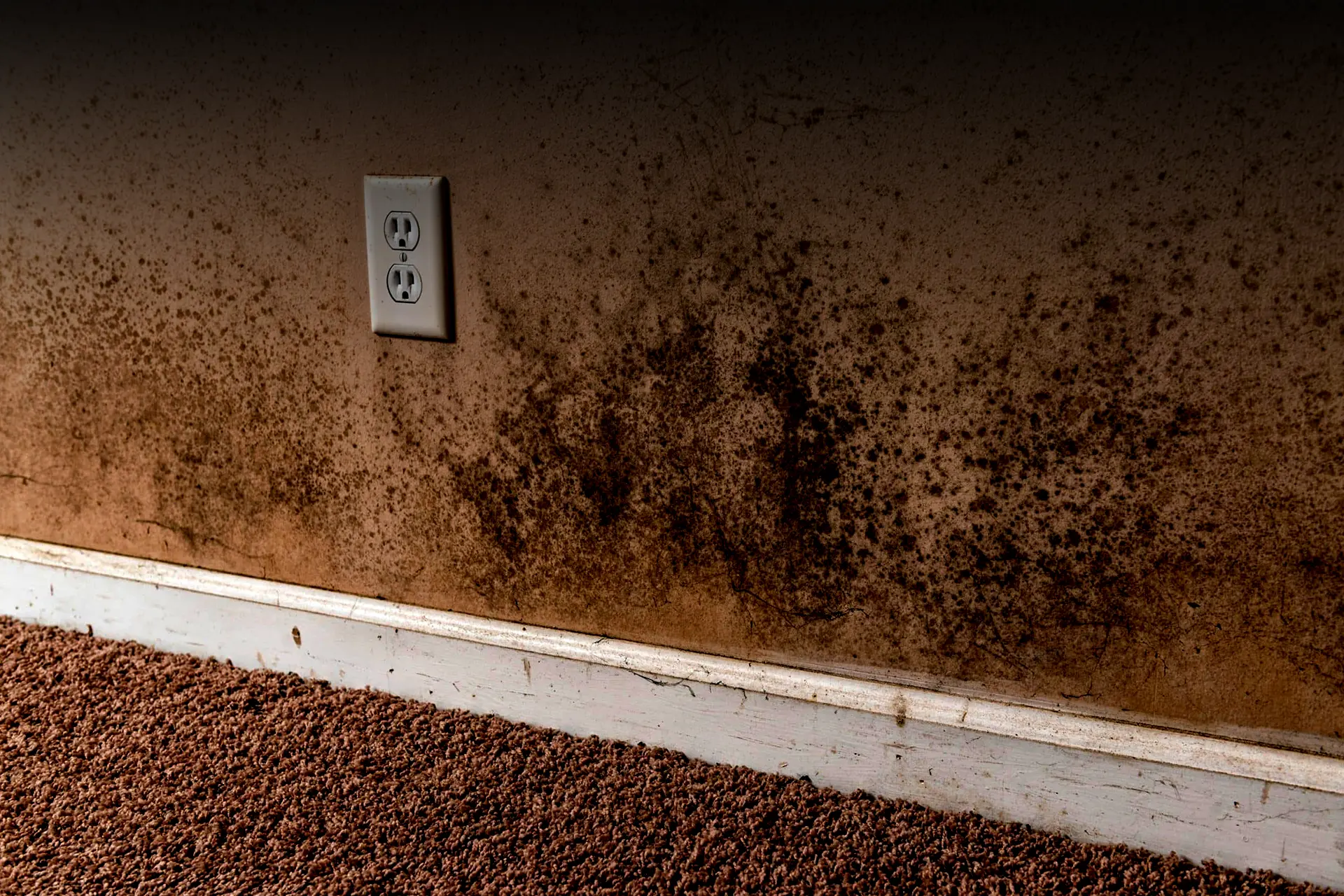
Efflorescence — the chalky white or gray mineral deposits on basement walls — indicates that water is moving through the concrete, even if no active seepage is visible. This is an early warning sign that should prompt investigation. Visible water seepage through basement walls or floor-wall joints, ranging from damp spots to actual flowing water during or after rain, indicates active water intrusion. Staining, discoloration, or paint peeling on basement walls points to moisture movement through the wall. Mold growth on basement walls, floor, or any organic materials stored in the basement signals sustained elevated moisture levels. Musty odors in the basement or emanating upward into living spaces indicate moisture and likely mold. Cracks in basement walls — particularly horizontal cracks or stair-step cracks in block foundations — require immediate professional assessment.
Outside the home, signs that your foundation may be at risk include soil that grades toward rather than away from the foundation — this causes surface water to drain toward the house rather than away; gutters that are clogged or have downspouts that discharge close to the foundation; and areas of erosion or pooling near the foundation after rain.
The Connection Between Foundation Water and Indoor Mold
Foundation moisture problems frequently produce mold issues that extend well beyond the basement. Moisture that enters through the foundation raises the relative humidity of the basement air. That humid air rises into the living spaces above through gaps and penetrations in the floor assembly — particularly in homes with open floor system designs — and can create conditions for mold growth on the underside of subflooring, in the floor cavity, and in finished lower-level spaces.
A persistent musty smell anywhere in the home — not just in the basement — can often be traced back to foundation moisture and the mold it supports. All Clean Restoration uses comprehensive moisture assessment tools including thermal imaging and moisture metering to trace moisture pathways from their foundation source through the building system.
Professional Foundation Water Damage Remediation
All Clean Restoration provides complete remediation services for water damage associated with foundation issues, including water extraction from flooded basements, crawlspace water damage cleanup, structural drying of below-grade spaces and affected floor systems, mold remediation for mold growth in basements and crawlspaces, and complete restoration of damaged materials. All Clean Restoration works with foundation waterproofing specialists when permanent waterproofing solutions are needed to prevent recurrence, ensuring that the remediation is not just a temporary fix but a permanent resolution.
📞 Illinois: 618-235-3202 | Missouri: 314-454-0442 | allcleanrestoration.com Basement & Foundation Water Damage — Crawlspace Remediation — 24/7 Emergency Response
Recent Blog Articles:

Smoke and Odor Removal: Refreshing a Home After a Small Kitchen Fire

Water Damage Categories Explained: Why Not All Water Removal & Cleanup Is the Same

The Silent Culprits: Water Heater, Washing Machine, and Appliance Leaks

Flooded Carpet: Should You Save It or Replace It?
All Clean Restoration's Other Services
Whether water, mold, fire, or smoke causes damage to your home or business, the effects are heartbreaking and often life-changing. We at All Clean Restoration understand the devastation and pain these events can cause. We also understand that quick and proper action is crucial to prevent further damage, red tape, and cost.

Licensed | Bonded | Insured