LICENSED | BONDED | INSURED
618-235-3202
Turkey Fryer Fires: The Thanksgiving Disaster You Can Prevent

If you've been devastated by water, mold, fire, and/or smoke damage, know that your cherished possessions, your home or business, can all be restored to pre-damage condition; bringing back your peace of mind.
Whether water, mold, fire, or smoke causes damage to your home or business, the effects are heartbreaking and often life-changing. We at All Clean Restoration understand the devastation and pain these events can cause. We also understand that quick and proper action is crucial to prevent further damage, red tape, and cost.
Call us any time, day or night:
1-800-4223944
Related Topics:
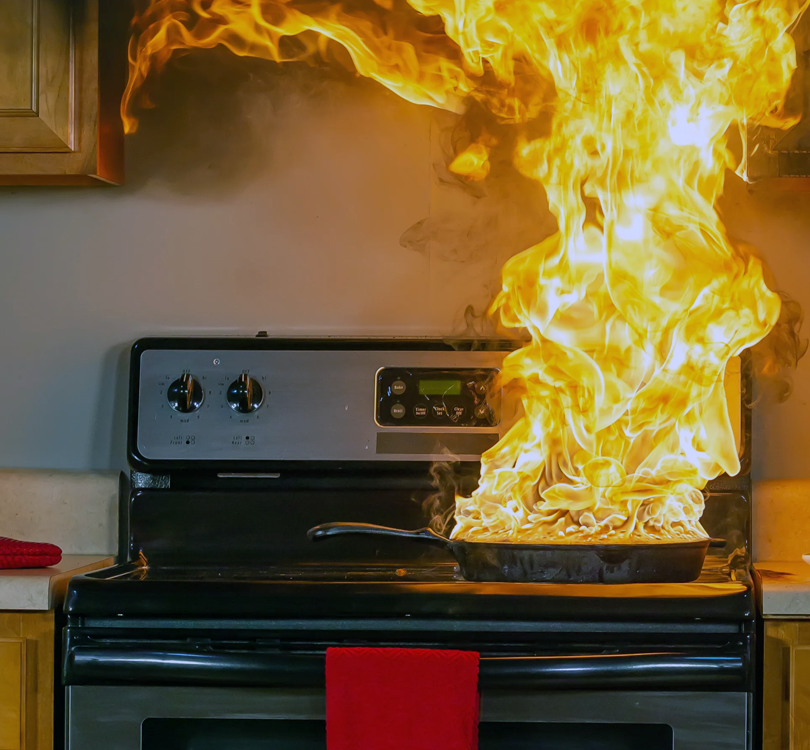
The oil has been heating on the driveway or in the open garage for a while. The turkey goes in still partly frozen, the pot boils over onto the burner, and in an instant there’s a column of flame. A turkey fryer fire turns a Thanksgiving in seconds, and it often takes the deck, the garage, or the side of the house with it.
Deep-frying a turkey makes incredible food. It also means gallons of oil heated past 350 degrees over an open flame — which is exactly how these fires start.
Why are turkey fryers so dangerous?
A fryer holds a large volume of very hot oil in a tall, top-heavy pot. Small mistakes turn into big fires fast.
- Fryers tip over easily, spilling hot oil across a wide area.
- An overfilled pot boils over the moment the turkey goes in.
- A partly frozen turkey makes the oil erupt and splatter.
- Oil on a hot burner ignites fast and spreads to anything nearby.
- No thermostat means the oil can overheat until it catches fire on its own.
FEMA’s U.S. Fire Administration warns that turkey fryers cause serious fires and burns every Thanksgiving and urges extreme caution with them (USFA cooking fire safety).
How do you prevent a turkey fryer fire?
Most fryer fires trace back to too much oil or a wet bird. These steps stop both.
- Thaw the turkey completely and pat it dry. Ice and water are what make the oil erupt.
- Measure the oil first. Put the turkey in the empty pot, add water to cover it, and mark the level. Dry the pot, then fill oil only to that mark.
- Fry outdoors on level ground, well away from the house, deck, and garage.
- Never fry on a wooden deck or under an overhang.
- Stay with it the whole time and keep a grease-rated extinguisher close. Never throw water on an oil fire — it spreads the flames.
What damage does a fryer fire actually cause?
A fryer fire rarely stays small. Because it usually starts right against the house, the damage spreads three ways at once.
- Fire damage to the deck, siding, garage, or exterior wall where it started.
- Smoke and soot that push indoors and coat walls, ceilings, and belongings.
- Water damage from the hose or extinguisher used to put it out.
That mix of fire, smoke, and water is why recovery is rarely a quick wipe-down. Our fire and smoke restoration team handles the soot and odor, and our water removal crews extract what firefighters leave behind.
What should you do right after a fire?
Once everyone is safe, a few early moves protect what’s left.
- Keep clear of the oil. It stays dangerously hot for hours after the flames are out.
- Don’t wipe soot with a cloth — it smears and sets into surfaces.
- Call a restoration team before the acidic soot has time to etch walls and contents.
- Document everything for your claim. Our insurance FAQ covers what adjusters want to see.
Soot and water travel into cabinets and walls near the kitchen, so our wall and cabinet drying crews dry those cavities before mold starts. Many smoke-exposed belongings can still be saved — see can my belongings be saved after water damage.
We respond across the Metro East and St. Louis area, including O’Fallon, Edwardsville, and St. Louis — on Thanksgiving Day and every day.
Turkey fryer fire over the holiday? Call All Clean Restoration right now. We handle fire damage, smoke and soot cleanup, and water removal across Southern Illinois and the St. Louis Metro. Someone answers 24/7, every single day of the year — including Thanksgiving, weekends, and holidays. Illinois: 618-235-3202 · Missouri: 314-454-0442 · Se Habla Español: 618-792-3633
Recent Blog Articles:

Is Your Attic Hiding a Costly Secret? Water Damage

Seconds Matter: Why Fast Action is the Key to Water Damage Restoration

Basement Leakage 101: Identifying the Real Problem Before It Destroys Your Home

When That “Weird Smell” Is Actually Toxic Mold
All Clean Restoration's Other Services
Whether water, mold, fire, or smoke causes damage to your home or business, the effects are heartbreaking and often life-changing. We at All Clean Restoration understand the devastation and pain these events can cause. We also understand that quick and proper action is crucial to prevent further damage, red tape, and cost.

Licensed | Bonded | Insured